Fall 2027 Graduate Opportunity
Contact Dr. Kandlikar before October 2026 to express your interest.
See below for more details.
Overview and research focus
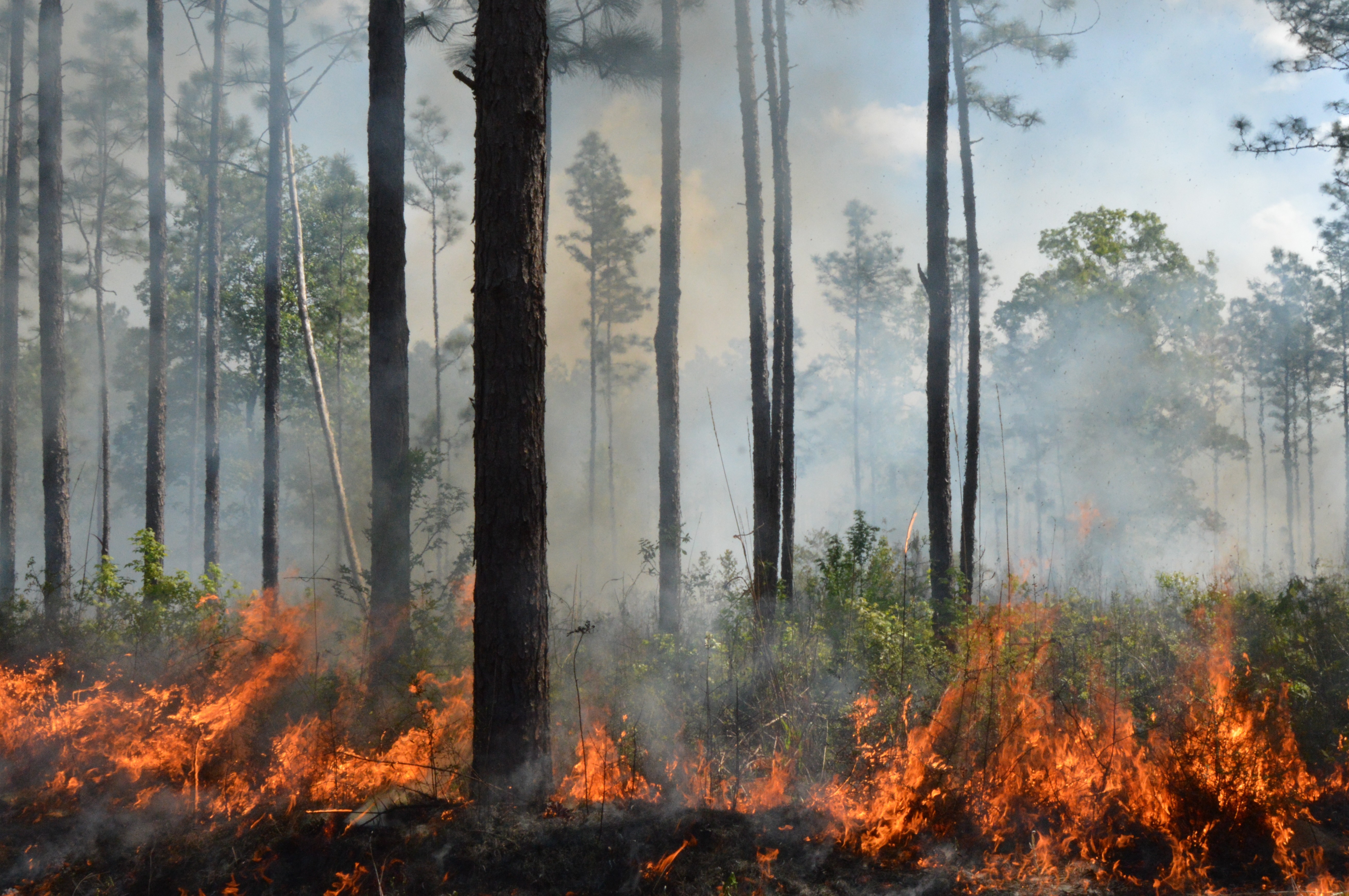
We are recruiting a PhD student to explore the relationships between fire, vegetation, and soil microbial communities in the longleaf pine ecosystem. This project is supported by funding from the US National Science Foundation.
The student will have an opportunity to integrate field observations, controlled experiments, molecular approaches, and mathematical modeling to address fundamental questions at the intersection of community ecology, fire science, cultural burning, and global change biology. Candidates with experience in field ecology, microbiology, bioinformatics, and/or quantitative ecology will be especially competitive, but we encourage students from a broad range of backgrounds to apply.
Funding
This is a fully funded PhD position. Students are supported through a combination of Teaching Assistantships from the Biological Science department and Research Assistantships funded by the lab. Students at LSU can also apply for additional funding from the Department and Graduate School, ranging from travel grants to support conference attendance to dissertation year fellowships. The lab will also support students’ applications to nationally competitive funding opportunities like the NSF Graduate Research Felllowship Program.
Timeline
Formal applications are due in late-December 2026, but interested applicants are encouraged to email Dr. Kandlikar before October 2026 with a short statement that describes your interest in our project and lab, as well as any past experiences that make you a good fit. Formal applications will be submitted directly to LSU Graduate School.
Top candidates will be invited for an on-campus visit in late January or early February 2027, and offer(s) will be extended in late-February 2027.
The position begins in August 2027, and we anticipate that students will finish their degree in 5-6 years.
Contact
Interested candidates should email Dr. Kandlikar a short statement that describes your interest in our project and lab, as well as any past experiences that make you a good fit. You are also welcome to send any questions you might have. We look forward to hearing from you!
Note: I understand that contacting a potential faculty mentor can feel intimidating, especially if you are seeking out opportunities for undergraduate research or as a potential graduate student. This post from Científico Latino provides great pointers on writing an initial contact email. Above all, please remember that if you are interested in joining my group after learning about my work, I will be as excited to meet with you as you will be about me!